Tuesday, 1 March 2011
My best art productivity tool? a daylight lamp
Friday, 25 February 2011
My blog post template
- First draft
- Insert headers (newsletter / Frequency)
- List related articles with links
- Create Amazon affiliate links
- Edit / revise
- Get photograph
- Format photograph for web use
- Anatomy of an Effective Blog Post by Michael Hyatt
Wednesday, 17 February 2010
I wished I noted that
This article was first published in my newsletter "Notes From My French Easel" – January 2010. Follow the link to receive this free monthly newsletter .
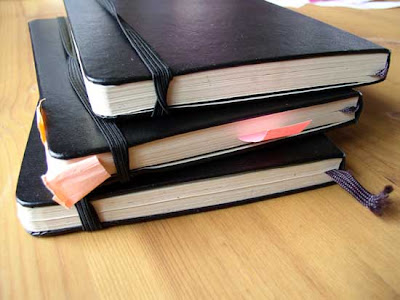
I have been using notebooks for years to record ideas or tasks to do, to note interesting facts when visiting exhibitions and to doodle or sketch compositions. Notebooks are wonderful laboratories for ideas: you can capture a burgeoning idea, let it grow and find it later. The great advantage over loose paper is that everything is in one place and you can also see the chronology and evolution of your ideas.

I use my notebook as a ubiquitous capture tool. The truth is that if you don’t note it, you won’t remember it (you will only remember that it was important!) or you will keep thinking about it all the time. Don’t let circling thoughts nag you when you paint.
There are a number of things that are worth noting as an artist. Colours sold under the same name vary from one manufacturer to the next, so you want to keep precise references of what you buy so you can replace it or avoid it (if you don’t like the colour or texture). A typical example is watercolour pans. After unwrapping a watercolour pan, I write the reference on the bottom of the plastic pan with a permanent marker. I also stick the label on a card and file it. It is also wise to make a colour chart with your pastel stick with the name of the colour, the brand and the reference number before the stick goes in the box and loose its label.
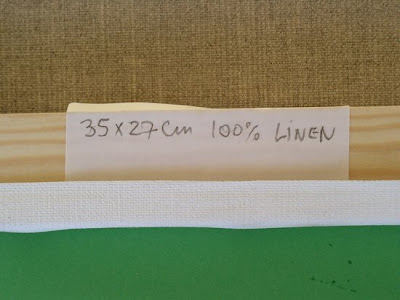
Some other pieces of information that I want to gather for my inventory is the nature, size and brand of the support I use. By the time I finish a painting, I have often forgotten the brand and characteristics of the canvas I used. The easy remedy is to write the relevant information with a pencil on one of the stretcher bars. For watercolour paper that I cut from larger sheets, I also mark the information with a pencil at the back. Before I frame the watercolour, I make sure I transfer all the information into my paintings inventory, but the information is also at the back of the work and will follow it everywhere if it is ever needed in the future.

Art practice Notebook Productivity Note taking Art inventory
Monday, 25 January 2010
The power of checklists
At the week-end, I read in the Saturday Times a good review of a recent book titled “ The Checklist Manifesto: How to get things right ” by Atul Gawande.

The book contains stories on how the introduction of checklists in hospitals let to significant results. For instance, a study showed that of the five basic steps that doctors could take to help to prevent line infections, doctors skipped at least one in at least a third of cases. By using a simple checklist, ten-day line-infection rates went from 11 per cent to zero.
Another profession to use checklists is aircraft pilots. In fact, use of checklist has become common in aircraft safety procedures.
It is easy to dismiss the use of checklists because they are low tech, simple and don’t cost anything. How such a simple tool can be effective in this age of electronics and gadgets? Are these simple tools being there to help the simple minds? Yet surgeons and pilots are using them and checklists save lives everyday.
There is a quote in the Saturday Times article to which I totally subscribe: “It is discipline rather than brilliance that preserves life. Indeed, discipline leaves more room for brilliance.”
Having checklist for routine tasks in your daily artist practice free-up your mind and let you concentrate on the creative side.
Checklists for artists
I found that checklists are not only practical, but also a great way to incorporate what you learn on the way. You discover that you forgot something when you go through the checklist and add it for the next time. By tweaking your checklist, you make your processes more efficient and you spend less time on tasks away from your easel.
Examples of checklists for artists:
- Organising an exhibition checklist
- Installing and exhibition checklist
- New painting checklist
- Framing checklist
- Plein-air painting pack checklist
- Shipping art checklist
- New gallery checklist
- Contract checklist
This is just scratching the surface…
Related resources
- Atul Gawande’s website. Make sure you have a look at “The checklist for checklists”
- The Checklist Manifesto: How to get things right
on Amazon (UK)
- “The Checklist Manifesto: How to Get Things Right by Atul Gawande” by David Aaronovitch – The Saturday Times 23 January 2010
- Review of the book The Checklist Manifesto by STEVEN D. LEVITT for the New-York Times
Art checklists Atul Gawande The checklist manifesto Art studio hacks Productivity
Thursday, 15 January 2009
So, you don’t have time to paint
This article was first published in "Frequency Magazine" – January 2009.
January is the time for New Year’s resolutions. May be you received a brand new paint box for Christmas and you wonder: “If only I had the time…” Not having all the time you think you need is not necessarily an issue. Twyla Tharp, in her book “The Creative Habit: Learn It and Use It for Life
“Remember this next time you moan about the hand you’re dealt: No matter how limited your resources, they’re enough to get you started. Time, for example, is our most limited resource, but it is not the enemy of creativity that we think it is. The ticking clock is our friend if it gets us moving with urgency and passion.”
You want to know the secret? Just start. The world is full of people with a novel in their head; people who wait to retire to learn to play the piano; people who hope for the ideal moment to paint. If you want to be more than a dream artist, you can change that for yourself:
- Start small, but often: the reason most of us don’t even start is the sheer size of the commitment. Just commit to draw or paint for fifteen minutes every day. If on a particular day, you have more time and feel like carrying on, just do so. You will be amazed by how much you can achieve by taking regular small bites at your projects.
- Makes it a habit: It takes thirty days to build a new habit. The key is to repeat the new habit often, ideally every day. If you fall off the wagon one day, don’t worry and start again the next day.
- Paint small: a small painting in oil or watercolour (6” x 8”) can be completed in one hour or less. By painting small, you can paint more often and see the result immediately, which is really gratifying. Try your hand on quick techniques: a sketch in your notebook will only take you a few minutes.
- Make it portable: it is easy to put together a drawing or painting kit that is small enough that you can carry it around in your bag. For drawing, you just need a notebook and a couple of pencils or felt pens. For watercolour, all you need is: a pad of watercolour paper; a small pain box with an integrated palette, one brush, one pencil, one eraser, a piece of tissue paper and a small container for water. Having this portable studio means that you can paint on the go, in the train during your commute, during your lunch break or while you wait at the airport.
- Organise your material for easy set-up: If you have a studio, then it is easy to let you current project on the easel and just close the door until your next session. But you don’t need a studio to start painting. Spend some time to organise your art materials by media, in separate boxes or bags, so that when you have time to paint, it takes only five minutes to set-up when you want to be creative.
- Reclaim these pockets of time: “Time management” is a deceiving expression because time is fixed and what you can really manage is the tasks you do during the allocated time. If you look closely, I am sure you can free-up fifteen minutes per day. You could cut down on television time for instance.
- Sign-up for an evening art class: If you enrol for a two hours evening class, you ring fence time to paint. The class is in your calendar, so you can let people know that you have to go. You will also learn a few things and meet like-minded people.
- Paint early morning or at night: Find a time when you are quiet and can immerse yourself in art making. Invest in a day light lamp (they have blue bulbs that simulate the quality of the day light) so that the next day your colours match what you wanted to achieve in the previous evening.
- Make art even when you don’t paint: Gardeners don’t stay idle during winter; they get ready for the new season, plough their patch and get their tools in shape. It’s not because you are away from your easel that you can’t make progress in your art. You can prepare canvasses or frame you works for instance. You can visit a museum, read about art, collect painting ideas in your notebook or walk around and look for painting subjects.
Further reading
Working in batch, the artist way
“Time Management for Creative People”, a free e-book by Marc McGuiness
Brad Blackman at Mysterious Flame wrote a series of articles on Art and Getting Things Done:
- Art and GTD (Part 1)
- Be Your Own Project Manager (Art & GTD Part 2 of 5)
- Using a Workflow to Maximize Your Creative Output (Art & GTD Part 3 of 5)
- Using To-Do Lists for Works in Progress (Art & GTD Part 4 of 5)
- Useful Lists for Artists to Keep (Art & GTD Part 5 of 5)
Recommended books:
The Creative Habit: Learn It and Use It for Life
Do it Tomorrow and Other Secrets of Time Management
Getting Things Done: How to Achieve Stress-free Productivity
Eat That Frog!: Get More of the Important Things Done, Today!
Time management Productivity Time to paint Twyla Tharp The creative habit Do it tomorrow Marc Forster Getting Things Dones David Allen Eat that frog Brian Tracy

Tuesday, 6 January 2009
Looking back at 2008 and a new exhibition starting
It’s good to look back and see what we achieved. It gives you a boost for the New Year. So, in 2008, I managed to:
- Create 35 paintings (mainly oil and watercolours plus a couples of pastel paintings). Not close to my initial goal of creating on average one painting per week, but still a good number.
- Read eight books on painting history or painting techniques (I would recommend reading Painting better landscapes by Margaret Kessler) and four books on creativity (I really liked The creative habit by Twyla Tharp for an artist view on creativity and Thinkertoys: A Handbook of Creative-Thinking Techniques
by Michael Mickaldo as a creativity manual). I still have a big pile of art books in English and French to read in 2009…
- Publish my monthly newsletter as well as my monthly art tip column in Frequency magazine, a local magazine. These articles appeared later on this blog, as well as other articles, making a grand total of 116 blog entries for 2008. I still have many things I want to talk about, but if you would like me to write on particular topics, please leave your suggestions or questions in the "Comments" section. I will do my best to pick these subjects in the months to come.
- Visit eight art museums or art exhibitions.
New exhibition
I have a new exhibition until the end of January 2009 at Stratton Community Leisure Centre, Grange Drive - Stratton St Margaret, Swindon Wiltshire SN2 4JY.

This exhibition features nine paintings in oil and watercolour.
Tuesday, 24 June 2008
Reverse engineer your writing
Reverse engineering consists in learning how a product is made by taking it apart and looking into its components. Once you understand the structure and underlying principles of the product, you can build another one based on the same ideas.
Here is the process in 5 steps:
1. Just start writing. Allow yourself a first bad draft: you never write, you always re-write. Start anywhere and don’t worry about the order of your ideas or style at this stage. The key point is to commit all the ideas you have to paper, without worrying about how good they are or how they flow together. You are looking for quantity, not quality.
2. Extract the ideas behind your paragraphs. The goal is to sum-up each paragraph into one sentence, one expression or one word. For instance, the current paragraph can be summed-up in four words “Reverse engineering writing process”. You will discover that some paragraphs contain more than one idea and should be split.
3. Reorganize the content of your copy using your summaries. Once you have all your 1-sentence summaries group together paragraphs that develop the same or similar ideas. To find the structure of your copy, you can write the ideas in a linear fashion or draw a mind map (to learn more about mind maps, see Tony Buzan’s web site). When this is done, put together your story with your “1-sentence” building blocks and connector words (like “because”, “then”, “however”). This way, you will see if the ideas flow in a logical way or if they need to be reshuffled.
4. Write your introduction and conclusion. Only after you know where you want to lead the reader you will be ready to write a good introduction. The same goes for your conclusion.
5. Refine and review spelling and style. Now that you have a sound structure, it is time to polish your writing. Re-write, weed out redundant words and simplify or expand paragraphs as necessary. Review again to correct style and spellings. It is better if you can leave a couple of days between steps 4 and 5 and between successive drafts in stage 5.
There are many advantages to this process:
- If you use the “reverse engineering” method, it does not matter where you start.
- By making smaller blocs (your 1-line sentences), it is easy to organize your ideas.
- It also becomes easier to tailor your ideas to different formats. You should be able to pitch your ideas in 30 seconds, in 5 minutes and in 10 minutes ; or when writing: in 1 sentence, 1 paragraph or 1 article. Once you grasp the logic of your ideas using the “1-sentence summaries” and you know how the different arguments branch out, you can do that.
4 Bonus writing tips
- Carry a notebook around and write down your ideas, any ideas.
- Keep a running list of topics you want to write about.
- Stories are not only for fiction. Can you make your point by telling a story?
- Stop in the middle of the piece you are writing. Your brain is craving for completion and if you stop in the middle of a paragraph or a sentence, it will be easier to start again.
Monday, 3 December 2007
Working In Batch: The Artist Way
“One of the basic rules of time management is that it is much faster to group similar actions together. This rule is the basis of the batching which I advise in Do It Tomorrow.”
As already explained, working in batch will save you time. But there is more to it from a productivity standpoint.
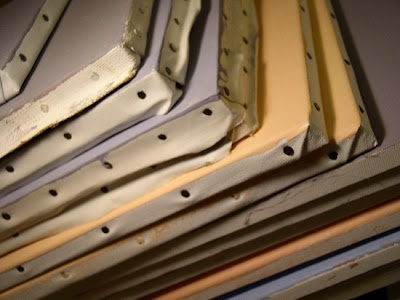
Preparation time stays the same, whether you get ready for one action of several similar actions. Some examples will illustrate this:
- Getting your tools out to apply gesso on painting boards
- Switching on the computer and starting Windows and other programs
- Getting you contact list out to make phone calls
You get the advantage of training. If you repeat the same task over and over again during the batching process, you will get better at it and more efficient. In some cases, it also removes the fear you have to accomplish certain tasks. If you hate cold calling prospects, making all your calls in one go will ease the pressure. The first call is always the most difficult one.
Save money: When I prepare MDF boards with tinted gesso, I mix a large quantity of gesso tinted with acrylic paint in an old ice-cream tub. I then apply the gesso onto the panels I cut earlier until I use it all. I make sure that I cut plenty of panels to use the gesso I have prepared. If I am left with couple of bear panels, they just wait until I prepare the next batch. This way, I am not wasting any gesso.
What can you work in batch?
Things you do everyday: Leo Babauta from Zen Habits wrote in his article “Haiku Productivity: Limit Your Work Week”:
“Batch. If there’s something you do every day, consider batching it all into one day. For example, I was writing my Zen Habits posts every day, but now I do it all at once. And in truth, it saves me time. You could do that with almost anything. Same thing goes for something you do throughout the day, like email or phone calls. Consider batching tasks like that into one session per day.”
Small tasks
- Print the legend on the back of the card (title of the work, dimension, my name, address of the website) using my computer and printer.
- Glue the photograph on the front of the card
- Write the card and the address on the envelope
- Put the stamp on the envelope
Let’s list some activities that lay themselves well to the “working in batch” method.
Artist’s job
- Preparing board panels for oil painting
- Making small canvasses
- Cutting watercolour paper
- Varnishing paintings
- Framing Pictures (or get your frames made)
- Preparing labels for your works
- Buying in quantity. You know you will need ten canvasses of a given size during the months to come: buy them in bulk. You may find a good deal because you buy in quantity. You also save time because you don’t need to run to the art shop each time you want to start a painting.
- Processing emails: One word of caution, here. Don’t wait until your inbox is overgrown and you can’t see the end of it. Processing emails in batch, once or twice a day in much more efficient than checking it every 10 minutes (unless you are waiting for a confirmation that you get this big commission…)
- Producing or writing postcards to collectors
- Updating your website with new paintings
- Writing posts for your blog
- Uploading photographs onto your computer
- Processing your expenses
For this to work, you need some minimal organisation, so that you are ready to proceed when you decide to work on a batch of tasks. Here are two examples:
- Expenses: keep all your receipts in an envelope (one envelope per month if you get many receipts)
- Keep a list of works that you want to get framed. This way, you won’t forget any when it is time for your next trip to the framer
Related Articles
- “Similar Actions” by Mark Forster.
- Do It Tomorrow and Other Secrets of Time Management by Mark Forster
Wednesday, 21 November 2007
Bonnard: working in batch and creative process
Working creatively in batch seems an oxymoron, because we associate traditional artistic creativity with originality and uniqueness. Art history tells us otherwise.
Andy Warhol’s methods took to the extreme the idea of working in batch, or in his case, on the production line model. He would have photographs endlessly screen printed on canvas by his assistants. It is not for nothing that he nicknamed his workshop “The Factory”.
Even before him, you can find examples of artists taking advantage of the working in batch method. Pierre Bonnard, the French Nabis painter, used to paint on pieces of unstretched canvas juxtaposed on the wall, in rows and near each other. He would work on eight or ten paintings at the same time, mixing one colour and applying it onto the canvasses in progress, on the wall. You can read a full account of Bonnard’s method illustrated by some photographs of the artist at work on the website of the New-York MoMA.
I can see several advantages to Bonnard’s working method:
- By working on several paintings at the same time, using the same colours, he built a cohesive body of works, even when the subjects were different.
- The tapestry of paintings on the wall would act as a mood board and keep him inspired. It is difficult to quantify the crossed influence between the works, but it must have happened.
- Economical use of the paint: More than often, you squeeze too much paint on the palette. It is more practical to mix larger quantities of paint in order to make sure you don’t run out in the middle of a session. Bonnard could minimize the amount of paint wasted by using the mixed paint on several canvasses at the same time.
- Notes from the Bonnard Exhibition at the New-York MoNA