Showing posts with label Business of Art. Show all posts

Wednesday, 23 March 2011

How to describe your artwork - mnemonic

Alyson Stanfield reminded all artists the proper way to describe their art: “Don’t forget that artwork is always listed as height by width by depth in inches or centimeters.” In other words: “Always H x W x D”. Read the whole article Crediting your artwork for the fine details or refer to Alyson’s excellent book I'd Rather Be in the Studio! (Affiliate link).


The trouble is that I can never remember the correct order when I need it (typically if I write an article for the blog or post a new painting on the website). So, I created a very simple mnemonic to help me to remember: How We Describe art.


Monday, 29 November 2010

Jazzing up your leaflets presentation

You need to present some leaflets on a table in a way that entice visitors to take one? You want to spread them in a aesthetic way? The video (with soundtrack) shows you a simple method to do that.


Monday, 1 November 2010

FASO Database of Known Art Scammers

From time to time, you can read a story of art scammers abusing the confidence of artists. Fine Art Studio Online (FASO) by Clint Watson (@clintavo on Twitter) put together a database of Known Art Scammers that you can consult for free.

You can search by typing in an Email address, IP address or the person's name. If you are not sure how to find the IP address from an email, please check the article "How to find the IP address of the email sender in Gmail, Yahoo mail, Hotmail, AOL, Outlook Express, etc"


This is one resource to bookmark. And thank you Clint for making this resource available.

Wednesday, 17 February 2010

I wished I noted that


This article was first published in my newsletter "Notes From My French Easel" – January 2010. Follow the link to receive this free monthly newsletter .


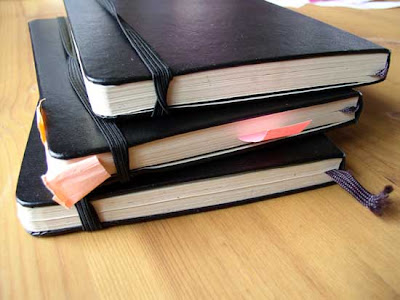
I have been using notebooks for years to record ideas or tasks to do, to note interesting facts when visiting exhibitions and to doodle or sketch compositions. Notebooks are wonderful laboratories for ideas: you can capture a burgeoning idea, let it grow and find it later. The great advantage over loose paper is that everything is in one place and you can also see the chronology and evolution of your ideas.


I use my notebook as a ubiquitous capture tool. The truth is that if you don’t note it, you won’t remember it (you will only remember that it was important!) or you will keep thinking about it all the time. Don’t let circling thoughts nag you when you paint.

There are a number of things that are worth noting as an artist. Colours sold under the same name vary from one manufacturer to the next, so you want to keep precise references of what you buy so you can replace it or avoid it (if you don’t like the colour or texture). A typical example is watercolour pans. After unwrapping a watercolour pan, I write the reference on the bottom of the plastic pan with a permanent marker. I also stick the label on a card and file it. It is also wise to make a colour chart with your pastel stick with the name of the colour, the brand and the reference number before the stick goes in the box and loose its label.

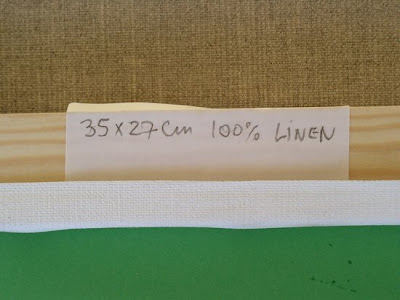
Some other pieces of information that I want to gather for my inventory is the nature, size and brand of the support I use. By the time I finish a painting, I have often forgotten the brand and characteristics of the canvas I used. The easy remedy is to write the relevant information with a pencil on one of the stretcher bars. For watercolour paper that I cut from larger sheets, I also mark the information with a pencil at the back. Before I frame the watercolour, I make sure I transfer all the information into my paintings inventory, but the information is also at the back of the work and will follow it everywhere if it is ever needed in the future.


Add to Technorati Favorites

Wednesday, 13 May 2009

The emotional side of art prices

We often struggle to come-up with a price for our work. This post is not there to give an answer, but more to reflect on the emotional landscape that surrounds us. Understanding where we stand is a good starting point to look at pricing in a more objective way.

In the foreword to the book “
The Price is Wrong: Understanding What Makes a Price Seem Fair and the True Cost of Unfair Pricing " by Sarah Maxwell, Jon Luther wrote:

“What Sarah makes clear is that a fair price matters because fairness is the emotional part of economic decision making. Without an emotional base, we cannot make decisions. We have no way to determine what is good, what is bad; what is right, what is wrong. We base these determinations on our personal expectations as well as on the rules of society, rules that we all know intuitively.”

Regarding the general perception of art pricing, signals are confusing:


  • When the press talks about art pricing, it is in general to report record-breaking price following the auction of a masterpiece. The price bears no connection with the initial price of the work. The monetary value may or may not be rational in the same way the stock market fluctuations are difficult to understand.

  • Another strong myth that surrounds pricing is the myth of the broke talented artist. Everyone knows that Van Gogh sold only one painting during his lifetime (“The Red Vineyard”, sold for 400 Francs). Some people still think that artists should not expect to make a leaving out of their art.


The price of art is more than cost. A work of art is the unique expression of the artist’s personality and the value of a work of art resides in the pleasure and inspiration it gives to its owner. How do you price emotions like “pleasure” and “inspiration”?

From the collector’s perspective (and this is true for any consumer), the first reaction to price is always emotional. Our perception of a work of art is altered by its price. If we see a price and believe it is too low, we think that there must be something wrong with the work and its artistic value. If we see a big price tag, we will infer that there must be some artistic qualities to the work (even if we don’t understand why).

From the artist’s standpoint, emotions can catch us in several ways when it comes to pricing our works:


  • Under pricing by lack of confidence. This becomes obvious when you ask an artist about his costs and discover that these are not covered by the price asked.

  • Under pricing because we don’t like a particular work. If it is a question of quality and you think the piece of art is not up to your standard, should it ever leave your studio? If it is a matter of taste, why discount it when other people may like the piece?

  • Pricing too high: art is so personal that we get emotional and price too high a piece of work that we like (in the hope that it will not sell).

  • Pricing too high: Pricing high to flatter your ego will not do you any good in the long term. What happens to the same ego if you never sell anything?

This article raises more questions than it brings answers. Pricing is art more than science. However, there are tools and guides that you can use to make your journey through pricing easier. I will cover these in later posts.


Add to Technorati Favorites


Monday, 2 March 2009

A marketing bag and DIY: Design It Yourself book

There is a big (justified) push to limit the number of plastic bags we are using while shopping, in order to reduce the impact on the environment. The Telegraph recently reported that, in the UK: “Plastic bag use falls by 26 per cent in two years”.

You see more and more reusable bags, some nice and some ugly, and most of them branded. The fabric bag is on the verge of becoming the new “bumper sticker”, so I thought it was time to make my own. Why advertise others when you could advertise your own web site?


It is great fun to come-up with ideas and go through the whole design process to end-up with a finished and unique product.

After sketching my ideas, I shot several photographs of and old Mercedes typewriter I bought many years ago. Then, using
Photoshop Elements 6 (PC) , I changed the letters on the round buttons of the keyboard to make-up the word “ART”. Finally, I wrote the domain name of my painting website in red with “Courier” fonts in order to stay in keep with the typewriter theme.

I bought the plain fabric bag in an art and craft shop as well as some transfer paper than allows you to iron-in onto fabric a design you print with your inkjet printer (The one used to make tee-shirts).

I plan to use this bag to transport back and forth the books I borrow from our local library.


DIY: Design It Yourself book by Ellen Lupton


The book DIY: Design it Yourself (Design Handbooks) gave me the idea to make this bag. It is a great book on design for non-designers. It is less about the rules and principles of design than showing you how you can design and make all sorts of things with a minimum of materials and a limited investment: books, brochures, CD cases, business cards, stationnary, tee-shirts, bags, press packages, etc.


The design of the book is attractive and effective, as you would expect. The book is bursting with examples that will get you spinning your own design ideas in no time. This is a good read and a source of inspiration for any artist who want to develop his marketing material and make it stand out. After I started reading it, I could not put this book down.


Add to Technorati Favorites

Friday, 5 December 2008

10 Reasons to keep an inventory of your art works (Part 1)

Keeping an inventory may seem a waste of your time. What use would it have? I would rather be creating and painting. See keeping an inventory as an investment to save you time and tears later. Let’s put it this way: when you realise you really need an inventory of your works, it is generally too late to reconstruct it for the past.


Why should you keep an inventory?

1. Measure your output and keep track of your goals. The best way to progress is to paint on a regular basis, everyday if you can. Seeing how many work you’ve already produced will give you a boost of energy.

2. Keep key information in one place (see “What information goes into your inventory” in Part 2 of this article)

3. Make your life easier. When did I finished this oil painting – Is it dry enough to be varnished? If you keep track of completion dates in your inventory, it will take you only seconds to answer these questions.

4. Get ready for the gallery. Could you answer questions like: how many works do you produce each year? How many paintings have you sold? What was the most expensive painting you’ve sold?

5. Know where your work is (In the studio /exhibition / consignment / loan / work sold)

6. Know where your work has been exhibited. Enter the details of all the places where the work has been shown.

7. Build a personal history file for each painting. You can document the circumstances around the creation of a particular work, the history of the place, the reason why you painted it. I have a comment section in my table where I can record miscellaneous information on a particular piece of work (for instance, if it was inspired by the work of another artist). I have a comment section in my inventory table where I can record miscellaneous information on a particular piece of work (for instance, if it was inspired by the work of another artist). Having this information will help you when you prepare for an exhibition or when you discuss a particular work with a potential buyer. Buyers love stories and having one at your finger tip (or ready in your mind, since you recorded it in your inventory) will remove the stress of having to find on the spot something interesting to talk about.

8. Keep track of your evolution: With each new work, you grow and evolve as an artist. Over the years, your work will take different direction, you will explore new avenues. It is therefore important to be able to retrace the path you took and see which painting came first.

9. Particular notes on material and painting techniques used. May be you tried something new or a particular work is the beginning of a new path in your artistic quest. In both instances, you want to be able to go back to your records and find out about this.

10. Curators will thank you. If your work gets to a museum curator, they will thank you if you can provide the information you collected in your inventory. See what Picasso had to say on dating and numbering his work:

«I never do a painting like a work of art. It is always a search. I am always seeking and there is a logical connection throughout that search. This is why I number them. I number and date them.

May be one day someone will thank me for it. »


(Picasso – in Alexander Liberman, Extract from « Picasso » in Vogue, New York, 1956)


Add to Technorati Favorites

Monday, 4 August 2008

My Blog Tools


The magic of blogging is that most tools come free but nevertheless offer great features. If you think about starting a blog, I am sharing with you what is in my blogger’s toolbox.


  • A moleskin notebook: it offers a flexible way to gather idea for articles, quotes and other material. Sometime, I write the first draft in my notebook, some other times, I just do a mind map or I list all the ideas that come to mind around the subject I am writing on.

  • Microsoft Word: The reason I type first in Word is the possibility to save the draft and come back to it to add to it and move sentences and paragraphs around. I can also use the program to check spelling and grammar. I have created a template for blog entries with the different scripts I am using (like Technorati and Digg) and the link to resources I frequently use when writing (like Amazon).

  • Blogger: A very easy to use blogging platform with excellent functionalities. The last one that really adds value is the possibility to write posts in advance and schedule their publication. No more excuse, even if you go away.

  • A digital camera (or the camera on my mobile phone): I take photographs of my paintings, but also photographs for illustration purpose. My rule of thumb is to have at least one photograph per post.

  • A photo editing software: Until now, I have used a program called Arcsoft PhotoStudio 2.0 that offers good basic functions. I just purchased Abode Photoshop Elements 6 (PC) and I am impatient to explore its possibilities.

  • ResizR : a website to resize your photographs online.

  • Blake’s Technorati link generator. You type the list of keywords for your article and the site creates the Technocrati html code for you.

  • Feedburner: This free service let your readers subscribe to your blog with the option to receive your articles by email or by using an RSS reader.

  • Google Analytics allows you see how many readers you have, where they come from, how long they stay on the site, etc. The data presented is impressive and you just need to be careful not to check your statistics every hour.


Related resources


  • If you have questions and want to learn more about blogging, the best resource I have found is ProBlogger.


Add to Technorati Favorites


Wednesday, 16 July 2008

An Important Title


This article was first published in my newsletter "Notes From My French Easel" – January 2008. Follow the link to subscribe to the newsletter.


I have been reading (in French) a book titled “Recollections of a Picture Dealer” by Ambroise Vollard. He was a key figure in the promotion of impressionist painters and knew them all. His influence went beyond impressionism, as he also sold Picasso’s works. His memoirs give an insight into the world of art dealers, art collectors and painters.

He reports an anecdote about Cézanne that shows how a title influences the viewer.

Once, Vollard was exhibiting one of CĂ©zanne’s paintings representing a group of naked women with another character who, looking at the way he was dressed, could be seen as a shepherd. Vollard re-used a frame he had, but forget to remove the frame plate with the title of the former painting that read: “Diana and Acteon”. The press described the painting as being a representation of Diana taking her bath and commented on the noble goddess and her attitude of offended virgin.

One collector told Vollard that he would have bought the painting, except for the fact that he already had another “Diane taking her bath” by the painter Tassaert.

Later in the year, Vollard was asked to send for an exhibition a painting by CĂ©zanne titled “The Temptation of Saint Anthony”. However, the painting had been sold in the meantime and Vollard sent instead the so-called “Diana and Acteon”, removing this time the frame plate with the title. As the organisers of the exhibition were expecting “The Temptation of Saint Anthony”, the painting went in the catalogue under this title.


The Temptation of Saint Anthony, by Cézanne


Press reviews described the painting as being “The Temptation of Saint Anthony”. Critics commented on the wicked smile of the seductive Devil’s daughter (the former noble goddess). The pseudo-Acteon had become a pathetic Saint Anthony.

On the last day of the exhibition, Vollard saw the collector who had refused the painting when titled “Diana and Acteon”. He had in his hand the review published in the paper and, triumphant, explained that he just bought the “Temptation”, which looked so realistic.

Remember this story next time you pick a title for your work. Titles do influence the viewers and their perception of your work, even if the viewers are not conscious of it.

The Book


Recollections of a Picture Dealer by Ambroise Vollard (English translation)
Available in Paperback -


See also:
Cezanne to Picasso: Ambroise Vollard, Patron of the Avant-garde (Metropolitan Museum of Art Publications)


Related articles


What’s your title ?


Add to Technorati Favorites


Monday, 26 May 2008

What Your Labels Tell About You?

While in vacations in Kent (South of England) with my family, we went to a restaurant in the city of Canterbury. They had a couple of paintings on display: watercolours and oil paintings.


I was distracted from the art by the poor look of the labels. They were handwritten, yellowish (grease from the restaurant’s kitchen), tattered and with bent corners. What did that tell me? It yelled: these paintings have been here forever and nobody wanted to buy them.

Small details like that are essential and make or break a sale. Your potential customer may not even realize that the labels put them off, but they will.

Many artists really care about their artwork until it is framed and just imagine (or hope) that, after this final touch, it will sell itself. The truth is that every little detail count and looking professional does not have to cost you a lot.

A few points to remember:
  • Get access to a computer and type your labels. They will be more legible and project a good impression.
  • Print your labels on heavy paper or Bristol cards. This way, the label will be stiff and you will avoid bent corners.
  • If you anticipate that the works may be exhibited for some time (semi-permanent display in a restaurant for instance), print duplicates of your labels and make sure you change the labels on a regular basis, so that they always look clean and in perfect condition.

Related articles

Two excellent articles on how to label your art by Alyson Stanfield from ArtBizBlog.com:


Monday, 7 April 2008

Art: You're in Business


I have exhibited several times in companies in Swindon, the town where I live. As an artist, I appreciate the opportunity to exhibit and I would like to encourage more companies to think about setting-up a gallery space in their buildings.


I am the boss of a company and I am here to make money… Why should I do that?


  • Being part of the community: by allowing local artists to exhibit, the business takes an active part in the community. One possibility is to offer the space in the following order of precedence: employees and their families and friends, local artists and finally local galleries.
  • Fostering employee’s creativity. You can invite your employees and their family to exhibit their works. Why not organize an employee photography competition with a small price? You may be surprised by the creativity of your employees and discover hidden talents. It also boosts morale. Art is rewarding and relaxing and happy employees are more productive employees.


  • Art in the workplace. If you rotate exhibitions every month and every other month, employees can enjoy new art all year round. It also provides free decoration for the office, while giving a chance to an artist to sell his or her work.


  • It’s good for business: the gallery becomes a talking point when you have customers coming to visit you. You are seen as encouraging the Art.


  • Do it for charity: One of the companies I exhibited at was asking artists to donate 10% of their proceeds to a charity. This is another way to be part of the community and to create goodwill at zero cost for the company (once the gallery is set-up).


  • The cost is mainly the initial set-up cost for the hanging system and appropriate lighting. Lights would be on anyway, so there is no additional cost here.

So, why don’t we see more companies embracing art in the workplace by creating a gallery space?


Add to Technorati Favorites


Friday, 4 January 2008

Wrap-up Your Sale


In November, I sold a few paintings during an exhibition. There were mostly Christmas presents, so I decided to go the extra mile and wrap the works with gift wrapping for the large watercolours and gift bags for the small oil paintings.


The buyers would have said nothing if the paintings just came wrapped into some protective bubble wrap, but the paintings looked so much better with their festive wrapping…

This made me think about packaging for artworks and packaging in general.

Once in Montpellier (South of France), my wife and I went to a shop to buy a wedding present. We chose a nice set of breakfast cups and saucers arranged on a painted wooden tray. The shop owner took the time to fashion an elaborate wrapping with Cellophane wrapping, dried flower petals and coloured ribbons. The present looked so much more expensive that it was with this original presentation. It also looked unique.

Another sector that put a great deal of work into packaging is the luxury industry. How would you feel if a bottle of expensive perfume was coming in a cheap square glass bottle and a plain cardboard box? The perfume would not feel expensive. Art is a luxury for many. You don’t buy art as you would buy a dozen of eggs. As an artist, you are not only selling a work of art, you are selling an experience and your packaging is part of this experience.

You may have to adjust what you do based on the cost of the work you sell, but the cost should remain reasonable, in particular if you compare it to the advantages this extra step brings:


  • It saves time for your customer. They don’t have to run around to buy the wrapping paper and take the time to wrap the painting.

  • Even if the painting is for someone else, it’s like receiving a present for your customer when you deliver your painting nicely wrapped.

  • For your customer, this is an unexpected extra. You just created the “free gift” effect. It makes your customer feel good and reassures her or him that spending money on your art was right.

  • It gives you control over the way your work is packaged. The packaging is the first impression the recipient of the painting will get. Your packaging is a good way to develop your branding. Go beyond functionality and get creative in the way you package your work.

  • Ready-to-offer artworks, all wrapped, may be one of your Unique Selling Points (USP), something that other artists don’t do in your area.

I would like to finish with a quote from an article on self-presentation on Behance:


"Spend some time on the packaging your product arrives in. You owe it not only to your clients, but to your work and most importantly, to yourself."


So, what your packaging is telling about you?


Related articles


Add to Technorati Favorites


Monday, 3 December 2007

Working In Batch: The Artist Way


Working in batch is a very effective way to save time. According to Mark Forster , the author three books about time management and personal organisation:

“One of the basic rules of time management is that it is much faster to group similar actions together. This rule is the basis of the batching which I advise in Do It Tomorrow.”


Why working in batch?
As already explained, working in batch will save you time. But there is more to it from a productivity standpoint.


Preparation time stays the same, whether you get ready for one action of several similar actions. Some examples will illustrate this:
  • Getting your tools out to apply gesso on painting boards

  • Switching on the computer and starting Windows and other programs

  • Getting you contact list out to make phone calls

Tools and material required are the same for batched items: This is a principle developed by David Allen in his book Getting Things Done: The Art of Stress-free Productivity (also known as GTD). You should group your tasks by context. If you have a section of your to-do list which is called “@call”, you can make all your phone calls at the same time. (Other examples of context: “@errand”, “@studio”, “@computer)

Easier to spot areas for improvement: When you repeat a task several times, it become easier to spot whether your process is efficient and how you could change it. Let’s put it this way: if you only perform a task once, it does not make the great difference if you don’t do it in an efficient way. If you repeat the task 10 times, you should at least notice its inefficiency, you will probably get irritated to the point that you will find a better way.

You get the advantage of training. If you repeat the same task over and over again during the batching process, you will get better at it and more efficient. In some cases, it also removes the fear you have to accomplish certain tasks. If you hate cold calling prospects, making all your calls in one go will ease the pressure. The first call is always the most difficult one.

Save money: When I prepare MDF boards with tinted gesso, I mix a large quantity of gesso tinted with acrylic paint in an old ice-cream tub. I then apply the gesso onto the panels I cut earlier until I use it all. I make sure that I cut plenty of panels to use the gesso I have prepared. If I am left with couple of bear panels, they just wait until I prepare the next batch. This way, I am not wasting any gesso.

What can you work in batch?
Things you do everyday: Leo Babauta from Zen Habits wrote in his article “Haiku Productivity: Limit Your Work Week”:
“Batch. If there’s something you do every day, consider batching it all into one day. For example, I was writing my Zen Habits posts every day, but now I do it all at once. And in truth, it saves me time. You could do that with almost anything. Same thing goes for something you do throughout the day, like email or phone calls. Consider batching tasks like that into one session per day.”


Small tasks

It is a good idea to batch small tasks and do them in one go at the end of the day, when your level of energy is lower.


Apply the batch method to the structure of the task


This idea is credited to Mark Forster who illustrates the point in his article “Similar Actions” with the most rational way to set-up a room for his seminar. I will use instead a personal and seasonal example for artists. It is time to prepare New Year cards for my contacts. Rather than buying cards (or having them printed), I decide to make them using a photograph of one of my paintings. The steps to get this done are:
  1. Print the legend on the back of the card (title of the work, dimension, my name, address of the website) using my computer and printer.

  2. Glue the photograph on the front of the card

  3. Write the card and the address on the envelope

  4. Put the stamp on the envelope
I could go through step 1 to 4 for the first card and start all over for the second card and so on. You realise that it would be much quicker to print all the legends on the cards at once (step 1), then to glue the photograph onto all cards in one go (step 2), etc.

Let’s list some activities that lay themselves well to the “working in batch” method.

Artist’s job
  • Preparing board panels for oil painting

  • Making small canvasses

  • Cutting watercolour paper

  • Varnishing paintings

  • Framing Pictures (or get your frames made)

  • Preparing labels for your works

Art business
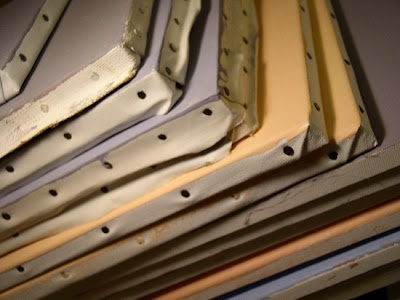
  • Buying in quantity. You know you will need ten canvasses of a given size during the months to come: buy them in bulk. You may find a good deal because you buy in quantity. You also save time because you don’t need to run to the art shop each time you want to start a painting.


Photograph: Petr Kratochvil
  • Processing emails: One word of caution, here. Don’t wait until your inbox is overgrown and you can’t see the end of it. Processing emails in batch, once or twice a day in much more efficient than checking it every 10 minutes (unless you are waiting for a confirmation that you get this big commission…)

  • Producing or writing postcards to collectors

  • Updating your website with new paintings

  • Writing posts for your blog

  • Uploading photographs onto your computer
  • Processing your expenses
These are only examples and I would love to hear about your own practice. Feel free to contribute and share your own experience by leaving a comment.

For this to work, you need some minimal organisation, so that you are ready to proceed when you decide to work on a batch of tasks. Here are two examples:
  • Expenses: keep all your receipts in an envelope (one envelope per month if you get many receipts)

  • Keep a list of works that you want to get framed. This way, you won’t forget any when it is time for your next trip to the framer

Related Articles
Further Reading

Monday, 8 October 2007

Thinking about Benoit Philippe Art Studio Limited?


Artists of the past, since medieval time, employed assistants and apprentices in their studio (Rubens counted many, included the gifted van Dyck who made a name for himself). Some contemporary established artists still have assistants who take in charge part of the execution of the work and deal with anciliary activities.

Most of us work and create alone, so why should you think of yourself as a business employing a skilled workforce?

In the book
E-myth Revisited, Michael E. Gerber promotes the idea of creating an organisation chart of your business with the different functions. He explains how the exercise is valuable, even if you are a one-person business. It forces you to work “on your business” rather than “in your business”.


In Mark Forster’s book Get Everything Done and Still Have Time to Play, he gives an additional reason to do that from a productivity standpoint: “Employing yourself gives you a degree of detachment from your work”. He gives some compelling examples of how we do things easily for friends that we struggle to do the same task for ourselves. There is a French saying that reads “Les cordonniers sont les plus mal chaussĂ©s.” (Cobblers wear the worst shoes).


Mark Forster's blog has an excellent article titled “Employ yourself” on this topic. He explains that if you dread doing your accounts, you should appoint yourself accountant for a day per month. During this time, this is your job for your artist company. So, it becomes harder to evade. You also know that at a precise point, the accountant will leave and the artist will be able to create without bookkeeping worries at the back of his mind.

Taking my own practice, I found five areas:


  • Operation (which includes the actual artistic creation)
  • Marketing
  • Finance
  • Sales
  • Support (Information technology, legal, etc.)


What is the point of spending time dreaming of your large organisation if you are a one-person only practice? There are multiple benefits to this exercise:


  • It forces you to look beyond the creative side of your artist practice: It is easy to neglect the business aspect of being an artist. When you have completed the organisation chart, you realise that painting is only one strand of your trade.

  • You can identify gaps in your business practice. Once you identified the different roles, you can write the job descriptions with the activities and tasks assigned to the different members of your organisation. If one person has a job that you are not currently doing, you know this is a gap you must fill in. Below is an example for what the Marketing function could cover.

  • You can allocate your time more effectively: How many hours do you need to dedicate to the business side of your practice? How many hours per month you need to accomplish the projects allocated to your different functions?

  • You can train yourself more efficiently. Once you know what activities you are covering, work on a training plan in the same way you would do for a business. Do you know about accounting? How good are you at PR activities? etc. This way, you have a chance to escape the “Jack of all trades, master of none” syndrome.

  • Clarify your goals and action plan. By writing down who’s doing what in your organisation, you can better define priorities in a balanced way.

  • Make your goals achievable by breaking them down: Aspirations and visions are great to lead you where you want, but you must translate them into projects and then define the next action to get each project moving. Each member of your organisation should have at least one project with one defined next action. Big aspirations (e.g. “I want to make a leaving from my art”) can look daunting until you bring them down to earth and anchor them into reality with a next immediate action you can take to move in the right direction.

  • Keeps you focussed: This comes back to a comment already made. By separating roles, you can concentrate on the task at hand for a given role. You avoid the situation where the artist is in charge of the accounts and the sales person manages the finance.

  • You can write procedure manuals: This idea is also at the centre of the “E-myth Revisited” which recommends applying to any small or medium business the turn key concept used in franchising. In a nutshell, you need to structure your business in a way that would enable anyone to step in and run it. How do you do that? By documenting every aspect of your business into procedure manuals that, when followed step by step, will give a predictable, consistent and high standard of service. You may think that painting is such a personal skill that this is not relevant to an artist. But what about your marketing manager, your account, your supply manager?… To give you an example, you can write a checklist on how to create and upload a new page onto your website.

It’s time to put the idea into practice. Take an A3 sheet of paper and put your name in a box at the top of the page. Underneath, write “Artist, CEO”. Then create your organisation and start working on your business.


Worth reading

E-myth Revisited

Get Everything Done and Still Have Time to Play

Mark Forster's blog : highly recommended.


Thursday, 20 September 2007

Your art portfolio in your pocket

You bump into someone (a potential client, a gallery owner or an old friend) and you wish you could show them your paintings… but your portfolio is at home. You can’t go around carrying an A3 presentation portfolio everywhere you go.

Technology can help you here. When I bought my iPod couple of years ago, I went for the video model with 30 Gigabite of memory. I am not using it for video, but I store my portfolio on it.


  • Although the LCD screen is small (5.2 cm x 4 cm), it has an excellent definition and is backlit.


  • In the menue, the pictures are presented as a mosaique and it is easy to find and select the one you want to show.


  • There is a slide show function if you want to show the whole porfolio. You can set-up the time per slide.


  • For the slideshow mode, the Apple software let you chose between different types of transitions between the slides (page flip, push accross, radial, etc.) or can pick the transition mode at random. It makes the presentation look very professional.
It is also possible to use the iPod as a harddrive to store documents. You could have some key Word documents always available:

  • Your artist statement


  • Your artist CV
In practice :
  • Take a model with sufficient memory to put your photographs in addition to the songs and podcast you will download.


  • Take the habit to refresh the portfolio on your iPod on a regular basis to make sure it is up-to-date and contains your most recent works. The best way is to schedule in your calendar a monthly refresh.
Take it further :

  • You may own another device like a Palm personal organiser or smart phone that could store your portfolio.


  • Take the different devices you own and think about how you could use them for your art or your art carreer.


Tuesday, 7 August 2007

Sell your art, not your soul

Selling is an art that we can all learn.

I was reading an article in Forbes titled “When To Dump That Great Idea” by Wil Schroter (09 July 2007). One of his statements prompted me to write this entry:

“At bottom, it doesn't matter how ingenious your product is--if you can't communicate its value, it may as well not exist.”

What is the value of your art? Artistic value and price spring to mind, but there is more to it. When trying to sell our art, we often take an “Art-centric” view of the word, as illustrated below.


  • The Art is what matters, so everything should gravitate around it.
  • The Artist comes second. After all, he is the one who created the Art and therefore the one closest to the work of art. 
  • The Customer is in the next circle. His interest in the Art warrants him this place.
  • The Rest of the World does not understand the Art or is not interested in it and is relegated to the periphery. 
This vision may seem a simplistic caricature, but how far is it from the way some artists approach selling their art?
When selling, your art is a good place to start, but only a starting point. Sales manuals will teach you that you should find and use your Unique Selling Point (USP). For example, your USP could be that:
  • You use a unique technique or precious material 
  • You use acid free conservation material (including for your framing)
These features are interesting, but only as far as they are relevant to your customers and translate into real or perceived benefits for them. It is time to look at the customer’s perspective. Why would someone buy your art? Here is a (non-exhaustive) list:
  • They fall in love with one of your works of art 
  • The work triggers an emotional response 
  • They feel proud to own an original piece of art 
  • The work reminds them of a special place or a special occasion 
  • They collect art 
  • They know you 
  • They just bought a new place and want to make it personal 
  • They want to buy a work of art for someone close to their hart 
  • They want to leave something special to their grand children


In his book Selling to Win , Richard Dennis wrote a chapter on The Rules of Professional Selling. His number 1 rule is: “Sell to people” and he explains:“understand that every sales presentation must be different because you will never find two identical people.”
Listen and understand your client’s motivation. Then you can use the features in your USP that support what the customer is looking for. For example, if your customer wants to leave something special to his grand children, she or he will be delighted to learn that you are using acid free material (feature) that warrant an optimal conservation for your work (benefit).

Don’t be afraid to be selective about the features you describe. It is tempting to go through the full list and try to impress customers, but irrelevant features will just put them off. How many times have you bought an electronic gadget with dozens of features and ended up using only one or two? The customer’s mind work around WIIFM: What’s In It For Me?

In other words: features are irrelevant unless they bring some benefits to the customer and bring him value.

The last piece of the equation is you, the artist. Art is personal and customers are more likely to buy if they are emotionally engaged. Hearing your story will just do that. This is your personal USP.

Rather than the “Art centric” view, think of the selling process as a balanced relationship between your art, yourself and your customer.


In Summary:
  • Know the USP (Unique Selling Points) for your art and yourself 
  • Listen to your customers (You have two ears and one mouth and should use them in this proportion) 
  • Understand your customers’ motivation 
  • Translate your unique features into benefits for the customer
To take it further

To work on your own Unique Selling Point, read the post by Alyson Stanfield from http://www.artbizblog.com/ on how to build and use your stories (while you are there, make sure you bookmark her blog and subscribe to her free newsletter. You won’t regret it): 
Some excellent books on selling: 

Selling to Win by Richard Denny is straightforward and very practical. Don’t be deceived by its apparent simplicity. It will teach the ABC of selling. A book to read again and again.

Selling Art 101: The Art of Creative Selling by Robert Regis Dvorak. As the title suggests, this book is geared towards selling art. You will find here some practical ways to get better at promoting and selling your art.