Showing posts sorted by relevance for query fire-up. Sort by date Show all posts

Tuesday, 17 July 2012

Creative exercise: Inspired by nature’s marks

I described this exercise in my post Fire-up your imagination. Our bathroom is tiled with stones, which bear a few interesting marks. I took a picture of these marks and worked with the first one.


And this is the cartoon monster that the first mark inspired me to draw.


The pink monster in our bathroom - by Benoit Philippe.
(Copyright 2012 - Benoit Philippe)

I worked with tracing paper. After that, I scanned the image and added colours and textures with Photoshop Elements.

The interest of the exercise is the randomness of the initial shape triggering a design that is different to one I would have created without any constraint. It is an interesting thought that nature can help us to be creative in many ways.


Related resources

Fire-up your imagination is one of the the 17 exercises in my free eBook “Creative Exercises for Artists and Everyone Else”. Check it out on this page if you haven’t read it yet.

Monday, 27 April 2009

On creativity

This article was first published in my newsletter "Notes From My French Easel" – March 2008. Follow the link to subscribe to the newsletter .


Creativity is a vast topic and I am only going to scratch the surface here. As an artist, I am interested in creativity in practical terms. It is a fascinating subject as well as one surrounded by myth. The most persistent one is the image of the creative genius who would have sparks of creativity coming out of nowhere. Names like Picasso, Einstein and Leonardo da Vinci immediately spring to our mind. The truth is that all of them were hard workers who dedicated their life to their pursuit and produced a lot along the way.

Having these icons can be both empowering and curtailing. They will inspire you if you see in them an illustration of the quasi-unlimited power of human imagination. They will bring you down if you think that they were born geniuses and you were not.

What is creativity? To me, creativity is a state of mind. You won’t be creative unless you believe you can be creative. Creativity is hard wired in our human brain and the question is whether or not we cultivate this gift, nurture it and use it. Children are really good at creating because no one told them they couldn’t.


Creativity is about coming-up with new connections and combining unrelated ideas. It goes across many fields: art, business, science… You should not confine it to your art studio because creativity has a place in everything we do.

A critical aspect of creativity is in the “doing”. You need to get all these ideas out of your head and bring into the tangible world. The more you do that and the easier it becomes. The bonus is that ideas generate new ideas and keep your creative wheel spinning.

In order to explore new territories, you must be willing to take risks; you must be willing to fail. The good news is that you don’t have to take risk in public, at least not all the time. You can paint in your studio or write in the secret of your home and it is up to you to show the results of your experimentations to the rest of the world.

According to Richard Florida (in “The rise of the creative class”), researchers identified four phases in the creative process: preparation, incubation, illumination and verification or revision.


  • Getting prepared in the literal sense means having your painting gears always ready, scheduling time in your studio and showing-up even if you don’t feel inspired. It also means creating an environment where unusual connections are more likely to happen. Expose yourself to the work of other artists in and outside your field, explore music, architecture, design, literature… Read a magazine you never read before. As Michael Michalko explains in his book “Thinkertoys”: “One of the paradoxes of creativity is that in order to think originally, we must first familiarize ourselves with the ideas of others.”


  • The incubation period is really important, but it is also important to capture ideas as they come because ideas are fragile and evanescent. For some paintings, I have a gap of several months and sometimes several years between the initial idea for the painting and its realisation. Over time, the idea was refined and morphed into something different. It grew from idea seedlings planted a long time ago in one of my notebooks.


  • The illumination comes on occasion. It would be dangerous to aim only at producing “illumination moments” because good ideas often emerge from not so good ones. You must suspend your judgement when you generate ideas and aim at quantity rather than quality.

  • Revision is producing a series of sketches to find the right composition; coming back to your canvas days after days; making a series of painting on the same theme to explore it in new ways; trying out a new medium to refresh an old theme.


Related articles and resources

Creativity under constraint

The creative habit by Twyla Tharp

Fire-up your imagination

Jackdawing for ideas


Recommended books


The Rise of the Creative Class: And How it's Transforming Work, Leisure, Community and Everyday Life

Thinkertoys: A Handbook of Creative-Thinking Techniques


Add to Technorati Favorites


Monday, 3 November 2008

Jackdawing for ideas


This is how Rob Bevan and Tim Wright describe “Jackdawing” in their book “Unleash Your Creativity: Secrets of Creative Genius (52 Brilliant Ideas)”:


“One easy way to engage in this process of constant research is to keep a camera handy (preferably digital) and take photos of everything that catches you eyes. Another is to squirrel away little bits of information (and intriguing bits of rubbish!) as you find them, building up a personal collection of seemingly useless and unrelated factoids, newspaper cuttings, URL, bookmarks, postcards, brochures, food packaging… anything that catches your eyes. This process is sometimes referred to as “jackdawing”.

The authors also warn you against being carried away and getting submerged by your findings. The image of Bacon’s studio in his Kensington mews house comes to my mind…


What's left of a delicate fritillaria I found in the garden. The round seed is prisoner inside the fragile armature of the flower.


In "Memoirs of the Life of John Constable: Composed Chiefly of His Letters (Arts & Letters)", John Leslie recalls the artist’s habit to collect artefacts from nature to complement his plein air studies:
“On going into his room one morning, not aware that he had yet been out of it, I found him setting some of these sketches with isinglass. His dressing-table was covered with flowers, feathers of birds, and pieces of bark with lichens and mosses adhering to them, which he had brought home for the sake of their beautiful tints. Mr. George Constable told me that while on the visit to him, Constable brought from Fittleworth Common at least a dozen different specimens of sand and earth, of colours from pale to deep yellow, and of light reddish hues to tints almost crimson. The richness of these colours contrasted with the deep greens of the furze and other vegetation on this picturesque heath delighted him exceedingly, and he carried these earths home carefully preserved in bottles, and also many fragments of the variously coloured stone.”
Henry Moore is another artist who used to bring back bits of nature in his studio. The Henry Moore Foundation (by the way, the Henry Moore Foundation web site is incredible and I could spend hours going through their collection and information) offers a panoramic view of Moore’s studio, which is fascinating. You can see a box of bones on the table and the commentary notes that the studio contained “bones, flints, roots, shells and other natural detritus” and that:

“Often Moore would apply plaster or plasticine on to a found object such as a flint or bone, or produce a plaster cast directly from the object itself. One example of this can be seen on the stand in the centre of the table. Notice the small plaster maquette with the bone beside it. This bone was the basis for Mother and Child: Hood 1983 (LH 851) in travertine marble, currently on loan from the Foundation to St Paul’s Cathedral, London.”
The drawing Artist's Hands Holding Bone 1981 (HMF 81(186) shows the artist’s fascination for bones. It is clear that the organic shape with rounded holes went into Moore’s sculptures. An example of this is the sculpture titled The Arch (1963-69). Another beautiful sculpture is Seated Woman: Thin Neck 1961 (LH 472) inspired by a breast bones of birds. Henry Moore’s words highlight how small natural objects can transform art:

“Since my student days I have liked the shape of bones, and have drawn them, studied them in the Natural History Museum, found them on sea-shores and saved them out of the stewpot... There are many structural, and sculptural principles to be learnt from bones, e.g. that in spite of their lightness they have great strength. Some bones, such as the breast bones of birds, have the lightweight fineness of a knife-blade.” (Henry Moore quoted in Philip James (ed.), Henry Moore on sculpture: A collection of the sculptor's writings and spoken words edited with an introduction by Philip James (edition cited); Viking Press, New York 1967)


Related articles and further reading
Fire-up your imagination

Books


Monday, 1 December 2008

Creativity under constraint


This article was first published in my newsletter "Notes From My French Easel" – September 2008. Follow the link to subscribe to the newsletter .


Jean-Jacques Rousseau, the French philosopher, said that “Obedience to the law that we prescribe to ourselves is freedom” (“L’obéissance à la loi qu’on s’est prescrite est liberté.”). This statement was made in a social and political context, but it applies equally to an individual artist.

Creativity and innovation thrive on constraint. An artist does not create outside constraints but transcends them.


At an initial stage, the artist assimilates the rules of his craft and art. He discovers the material he his using and the rules of good conservation. He learns, work after work, to get the best out of the material and how he can use particular effects to shape his artisitc vision. He studies the masters and learns from other artists.

After mastering the rules, the time comes to break them and see what happens. This is the wonderful journey of discovery.

Finally, the artist recreates the rules, he writes new poetry out of old words. He makes the craft look effortless, he creates his own constraints to stretch his artistic boundaries and express himself. It is like a game of constant renewal, while still being trully personal and particular.

The truth is that limitations encourage creativity. The mind needs focus to excel. Give your mind a centre of attention and it will respond. Leave him into the wild and it will wander with no aim and no result.

How can you get your mind to react creatively:

1. Paint or draw something you never painted before.

2. Chose an unusual format to work with (a square canvas or a very long one for instance).

3. Paint with only three colours.

4. Remove from your palette your favourite colour.

5. Try a new medium.

6. Listen to a piece of music and paint what it reminds you of.

7. Make a drawing or a painting of a childwood memory.

8. Paint a canvas with only one big brush.

9. Take a small canvas, set a timer to 60 minutes, and aim to complete the painting within that time.

10. To find new painting topics, take a piece of paper, write the numbers 1 to 10 vertically on the left side, followed by the words “I will paint…” and complete each sentence. Your mind crave for completion and this will force your brain to come-up with answers (this is the technique I used to draft this list of ten items).


Related articles


Add to Technorati Favorites

Monday, 12 May 2008

Fire-up your imagination


“I have in the past seen in clouds and walls stains which have inspired me to beautiful inventions of many things. These stains, while wholly in themselves deprived of perfection in any part, did not lack perfection in regard to their movements or other actions.”

Leonardo da Vinci (In
Leonardo on Painting: Anthology of Writings by Leonardo Da Vinci with a Selection of Documents Relating to His Career as an Artist (Yale Nota Bene) )

An old stone wall in the village of Assas in the South of France


Get into the habit of using random shapes to get your imagination started. Abstract shapes are seeds to grow your creativity from.

The human mind naturally looks for meaning and it will either consider shapes it does not recognise as being unimportant “noise” or it will relate the perception to existing knowledge and create meaning where there are only shapes. The key is to keep an open mind and “question” the shape you discover.

There are many opportunities to find around us shapes to work with. Play with the shapes you can see in:

  • Clouds
  • Geometric patterns on carpets or wallpapers
  • Peeled bark on trees
  • Moss growing on trees
  • Stains on old walls
  • Negative shapes in foliage

The roots of a sequoia tree

Creative exercise

Take a drawing pad and make an outline of a stain you found. Then look away from the subject and see what you can create with this abstract shape as a starting point.

Don’t hesitate to turn your pad on the side or upside down and see if the stain in this new position inspires different ideas.

Visual arts are based on patterns. Even if you don’t see them at play, they guide the eyes through the work: the diminishing lampposts along the road or the interlocking shapes of buildings for instance. On top of stimulating your imagination, this exercise will also develop your sense of working with patterns.


A stone egg I brought back from Morocco. Can you see a bird?


Add to Technorati Favorites


Monday, 5 December 2011

The blank canvas syndrome

This article was first published in "Frequency Magazine" – December 2011.

Writers have blank page issues and painters may encounter the blank canvas syndrome: a dry spell where we lose the energy to paint, the appetite for creating or the habit of drawing. We become too busy with our life or feel in a rut, making again and again the same painting.


A period of rest from the easel is not a bad thing if it’s not for too long. I find pauses necessary to incubate ideas or assimilate new explored territory. However, there is a risk that you break your good habit of creating daily. One way to take a break without really stopping is to explore a different medium or a new technique.

If you have stopped painting for some times and you feel down because of it, the best way out is not to ask yourself “why?” but just to take small steps to get back into it. Artists are “makers” and it’s by making that we find again our artist way. Here are five suggestions to end a dry spell:


1. Start small: do a small sketch or a small study in oil, watercolour or acrylic. It will only take you ten minutes to an hour – not much time really. The main obstacle is often to get started and if you tell yourself “I am just going to make a small study, nothing much really”, your brain stops worrying about it and you passed the first hurdle.

  
2. Go plein-air. Painting plein-air (i.e. on location) offers a different sensation. As you are outside of your house, distractions will not get on your way. As you go on your painting expedition, you carve out painting time in your schedule. The change of scenery is also good for your morale and feed your inspiration.

  
3. Visit a museum or an art gallery. Looking at art always gives me the urge to paint. Seeing art works “in the flesh” is different from browsing mere reproductions. You can see the texture and feel the touch of the artist.

4. Read art books and art magazines. Read widely: artists’ biographies or correspondence, artists’ writings, art instructions books and articles. Read for 30 minutes and then start a small work.

5. Consult your idea file. If you don’t have an idea file, it’s a good time to start one. I have a notebook that I carry around and make notes of ideas for future paintings. It can be anything from subject matters, a particular location where I could paint on site, a quick thumbnail of a composition or a possible title for a future piece. Going through your old paintings may also prove a valuable exercise, by bringing you ideas on where you want to go next.

Related articles


Lateral reading

Fire-up your imagination


Wednesday, 25 March 2009

Leonardo da Vinci on judging your own work

«When the work stands equal to one’s judgement of it, it is a bad sign for the judgement. When the work surpasses one’s judgement that is worse, as happens to someone who is astonished at having produced such good work, and when the judgement disdains the work this is a perfect sign. If someone with such an attitude is young, without doubt he will become an excellent painter, but will produce few works, although these will be of such quality that men will stop in admiration to contemplate their perfection »

Leonardo da Vinci ( in “Leonardo on painting”, edited by Martin Kemp – Yale NB edition)


Leonardo da Vinci The Virgin and Child with St. Anne and St. John the Baptist - Source: Wikimedia


Related articles

Friday, 28 December 2012

Fire-up your imagination (the video)


If you do not see the embedded video, you can watch it on YouTube.
Last July, I published a post Creative exercise: Inspired by nature’s marks and I wanted to make a short video of the process, but did not get around to do it… until now.

Monday, 19 May 2008

Martin Kemp talks about art and science


I went to listen to Martin Kemp who gave a talk on “Art and Science” during the Swindon Festival of Literature.

I read “Leonardo on painting” edited by Martin Kemp and was impressed by the editorial work he had done with Leonardo’s notebooks, organizing the content into sections and creating a natural flow from diverse sources. I was therefore looking forward to hear what he had to say on science and art.

Kemp has been writing a column in the famous
Nature magazine for many years and a first compilation of his articles was published under the title “Visualizations: The Nature Book of Art and Science”.


A more recent book (from September 2006), “Seen/Unseen: Art, Science, and Intuition from Leonardo to the Hubble Telescope” regroups articles published in Nature around themes. Some of these themes are what the author called “deep line intuitive continuity” and are going back to childhood: the pattern of the flames in a fire, the rhythm of the waves and the shape of shells.

He discussed how art and science start from these intuitions. Taking examples from Leonardo da Vinci and Albert Einstein, he showed the power of visualization.

Kemp then explored 3-D geometry, splashing and folding. Illustrations were taken from the scientific world and from the art world.

My favourite quote from the conference:

“The alert mind picks-up things it does not expect to pick-up.”

There was a lot of information but, at the same time, the session lacked structure and a sense of direction. At the end of the talk, I was left with a large collection of facts and I was trying to find how they related to each other and what the interaction between art and science was. It was ironic as Kemp talked about “structural intuition” and how we extract structure from the world.

To take an image, I think Kemp described art and science as separate paths. He walked these paths but never really told us when these paths intersected (apart from the allusion to the fact that Jackson Pollock owned a copy of D’Arcy Thompson’s book with a study of splashes).

Let me tell you about my own intuitions:


  • Artists open the mind of scientists by helping them to visualize the world that we cannot see.

  • Scientists who can visualise are better equipped that those who cannot, because new theories often go beyond words and manipulating images is like manipulating concepts.

  • Although science feeds on rigor, precision and proofs, creativity is necessary to envision what you want to prove. Both art and science use the power of unusual associations to short circuit established ways of thinking and go beyond the consensual views of the world.


Books by Martin Kemp


Seen/Unseen: Art, Science, and Intuition from Leonardo to the Hubble Telescope

Leonardo Da Vinci: Experience, Experiment and Design

Visualizations: The "Nature" Book of Art and Science

Leonardo on Painting: Anthology of Writings by Leonardo Da Vinci with a Selection of Documents Relating to His Career as an Artist (Yale Nota Bene)

The Oxford History of Western Art

Spectacular Bodies: the Art and Science Of the Human Body


Links for Martin Kemp


Add to Technorati Favorites


Thursday, 29 November 2007

The Art of Ordinary


Beauty can be overwhelming for an artist. I was struck by a postcard that Matisse wrote to Bonnard from Tahiti, Pateete, on 6 June 1930:

« Ai vécu 20 jours dans une « île de corail » : lumière pure, air pur, couleur pure : diamant saphir émeraude turquoise. Poissons mirobolants. N’ai absolument rien fait excepté mauvaises photos. » [Quoted from the Matisse / Bonnard Correspondence 1925-1946 (Gallimard – ISBN-10: 2070722376 – in French)]

We can translate this as:

« Lived 20 days in a «coral island» : pure light, pure air, pure colour: diamond sapphire emerald turquoise. Fabulous fishes. Did absolutely nothing except bad photographs. »


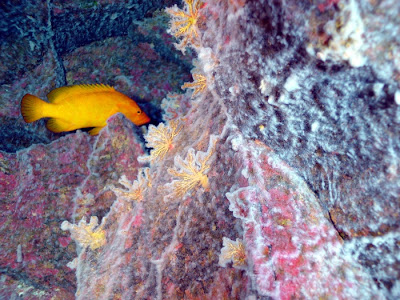
Source: http://www.photolib.noaa.gov/index.html
Location: Mariana Arc region, Western Pacific Ocean
Credit: Pacific Ring of Fire 2004 Expedition. NOAA Office of Ocean Exploration; Dr. Bob Embley, NOAA PMEL, Chief Scientist


In the case of Matisse, this beauty was not lost forever. I can see the influence of this experience years after, in Matisse’s cut out papers.

The power of the artist is to turn ordinary subjects into extra-ordinary works. I find a particular strength in everyday subjects because it is like waking-up viewers to their surrounding. You paint a building and people who have lived in town for years suddenly realise its existence. Beautiful landscapes don’t need any help from artists to get noted.

The artist faces a dilemma. New scenery brings many potential painting subjects because of its novelty. However, the lack of familiarity with the location makes it more difficult to capture the mood of a particular place. On the other hand, you live in a place for too long and you don’t see it anymore. As Picasso said: “Seeing, this is what is difficult, we are seeing sometime, rarely. We are watching without seeing.” (« Voir, c’est ça qui est difficile, on voit parfois, rarement. On regarde sans voir. » - Picasso quoted by André Verdet in his book “Picasso et ses environs”)
We need to learn to see as an artist, to see a painting in the landscape, right before our eyes.

You can develop strategies to revive the novelty in the familiar:

  • Painters will paint the same spot again years after a first attempt. They also travel to the same locations at regular intervals, learning each time a little bit more about the place while discovering it again each time.


  • Developing over time a series of works based on the same place.


  • Painting as part of a group to see how other painters capture the subject. Impressionist painters did this a lot. Cézannes and Pissarro went together to paint landscapes that Pissarro had first painted in the late 1860s.


Monday, 5 April 2010

The creative Process


This article was first published in my newsletter "Notes From My French Easel" – March 2010. Follow the link to receive this free monthly newsletter.


In the expression “creative process” the important word is “process”, because the best way to get creative is to practice you art regularly. You may not realise in the moment of creation that you are being creative and it is only after, when you reflect on a particular work, that you see its creativity. You don’t want to have to think “Am I creative?” in the fire of the action. You just want get started and be “in the flow” and keep going as long as you can.


Colorful Pencils by Petr Kratochvil


The best way to increase your chances of hitting the creative spark is to ensure a regular output. There is always the possibility to edit out your work and keep your experiments to yourself. As Curt Cloninger explains in his book “Hot-wiring Your Creative Process: Strategies for Print and New Media Designers”: “Intentionally following a clearly defined (or even loosely) defined process may be the single most useful practice in any designer’s arsenal.” This statement remains true when you replace the word “designer” by “artist”.

Twyla Tharp, the author of the book “The Creative habit”, also insists on the importance of the process: “Creativity is a habit, and the best creativity is a result of good work habits. That’s in a nutshell.” She also stresses the power of rituals to get you started: “It’s vital to establish some rituals – automatic but decisive pattern of behavior – at the beginning of the creative process, when you are the most at peril of turning back, chickening out, giving-up or going the wrong way.”

Related resources

Hot-Wiring Your Creative Process: Strategies for Print and New Media Designers

The Creative Habit: Learn It and Use It for Life


Add to Technorati Favorites